Sidisha Shyam Barik

M.S. Computer Science · University of Massachusetts Amherst

Sidisha Shyam Barik

Computer-vision and machine-learning researcher working on multi-object tracking, Bayesian filtering, and generative models.

Publications

GPU-GLMB: Assessing the Scalability of GPU-Accelerated Multi-Hypothesis Tracking
IEEE MILCOM 2025

GPU-GLMB: Assessing the Scalability of GPU-Accelerated Multi-Hypothesis Tracking

P. Balakrishnan*, S. Barik*, S. M. O'Rourke, B. M. Marlin

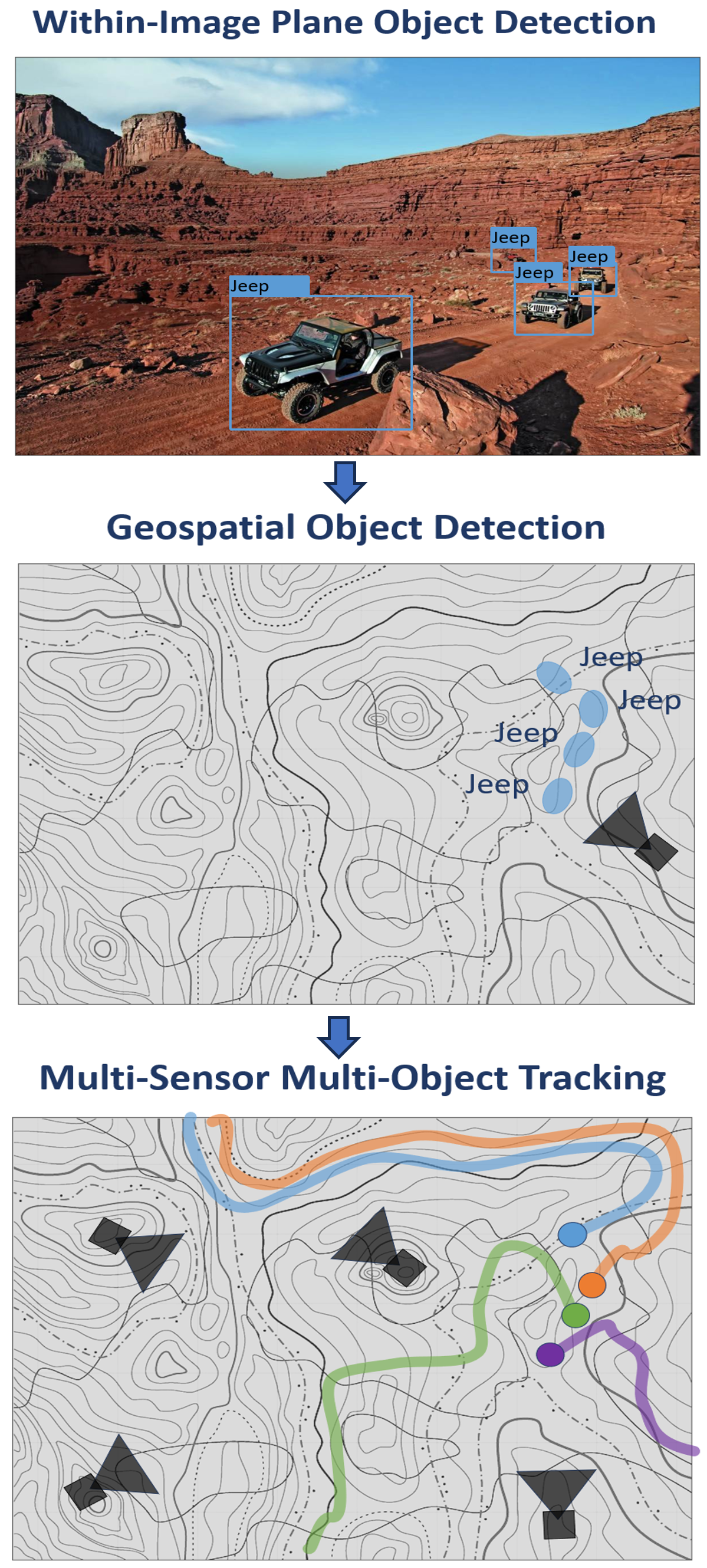
Real-time tracking of every vehicle moving through an area by fusing video from a network of smart camera nodes into accurate, map-aware geospatial trajectories. I re-architected the GLMB filter , the mathematically exact but famously slow gold standard for multi-object tracking , to run fully in parallel on GPUs, reaching sub-100 ms latency from edge devices to servers. Built end-to-end in PyTorch and validated on complex real-world convoy data.
Information Fusion 2026 · Under review

Improving Target Tracking in Stone Soup via State-Dependent Process Noise Models

B. M. Marlin, S. M. O'Rourke, S. Barik, P. Balakrishnan, C. Samplawski

Makes multi-object tracking more robust by letting the motion model's process noise adapt to a target's state, so the tracker better handles clutter, missed detections, and complex vehicle maneuvers. Developed and evaluated within the open-source Stone Soup tracking framework.

Projects

Efficient Residual Stream Scaling for Transformers

Efficient Residual Stream Scaling for Transformers

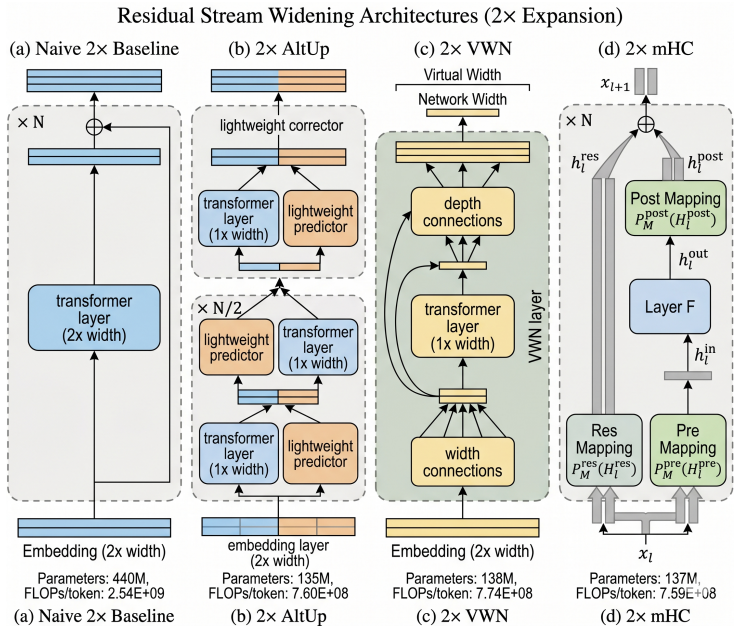
A collaboration with Google DeepMind on a core question in transformer design: can a model gain representational capacity without paying the quadratic cost of simply making it wider? The idea is to widen the residual stream while passing a compact representation into each block, decoupling capacity from compute. On top of a 135M-parameter GPT-2-style baseline (Nanochat), we implemented the leading residual-scaling methods, mHC, VWN, and AltUp , and ran the first head-to-head comparison of them at small scale (pre-trained on 13.5B tokens), measuring not just loss and downstream accuracy but the full cost picture (training and inference FLOPs and wall-clock, including the I/O overhead of the extra streams) and probing the streams to understand where the gains come from.

LLM PretrainingTransformersResidual ScalingInterpretabilityPyTorch
Autonomous Human Following Robot

Autonomous Human Following Robot

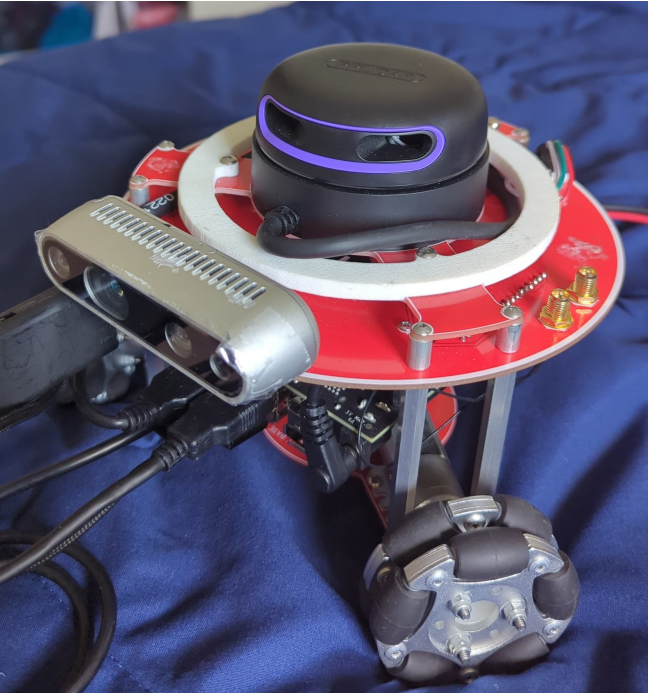
An end-to-end ROS robot that follows a person in real time on embedded hardware. We extended SORT with a custom appearance-based re-identification module to hold the target's identity through occlusions, and deployed the full perception-to-control stack on an NVIDIA Jetson , running at 10–15 FPS with a 1.2 s response time.

ROSJetsonSORTRe-IDComputer Vision
Differentiable Particle Filter for Geospatial Tracking

Differentiable Particle Filter for Geospatial Tracking

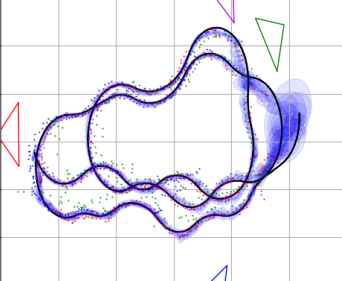
A geospatial vehicle tracker built as a fully differentiable particle filter in PyTorch , so its motion-model parameters are learned directly by backpropagation instead of hand-tuned. A non-linear CTRV motion model captures real vehicle turns, while map-based constraints split the particle distribution into valid hypotheses at intersections (left vs. right) rather than letting it drift through walls , keeping tracks physically valid through blind spots.

Particle FilterDifferentiableCTRVMap ConstraintsPyTorch
Spatial Reasoning in Vision-Language Models via JEPA World Models

Spatial Reasoning in Vision-Language Models via JEPA World Models

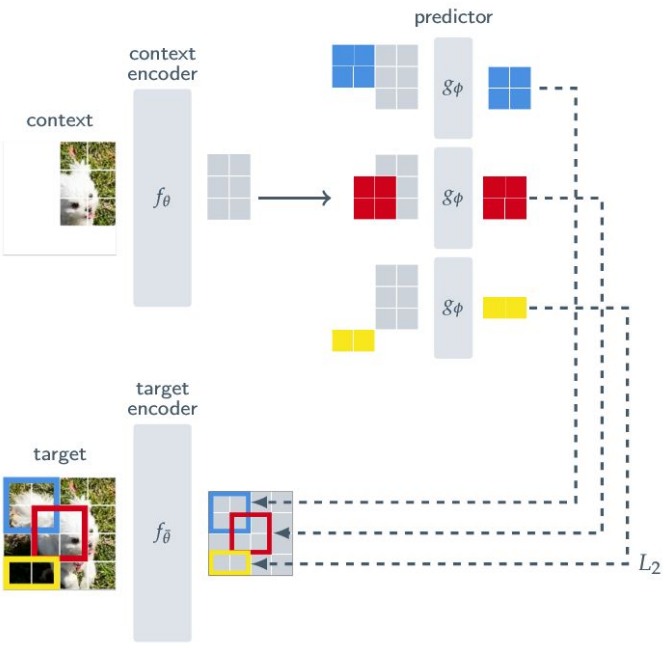
A vision-language model that reasons about geometry, not just labels: I replaced the usual semantic vision encoder with a self-supervised I-JEPA world model and built a feature-translation module to align its geometric representations with a Qwen2-7B language model. A two-stage alignment + instruction-tuning pipeline , trained on a single GPU with LoRA and 4-bit quantization , was then evaluated for spatial grounding and hallucination on object-permanence benchmarks.

VLMI-JEPAWorld ModelsLoRAQwen2
Exploring Noise Schedulers in Diffusion Models

Exploring Noise Schedulers in Diffusion Models

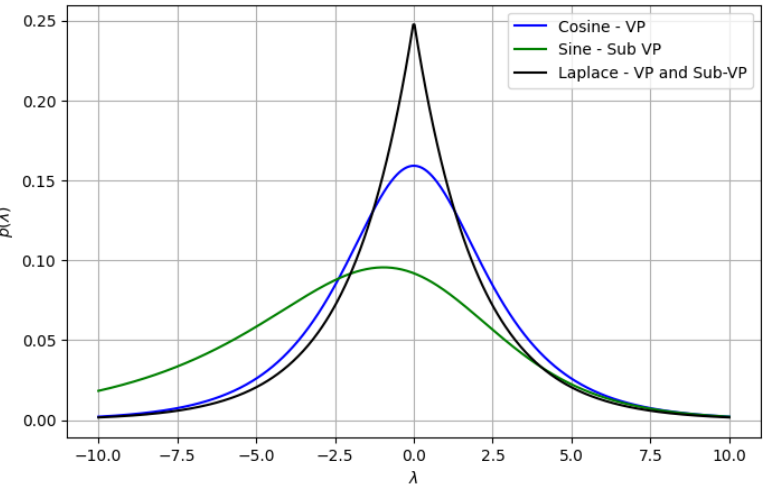
An end-to-end study of how the noise schedule shapes diffusion-model training and sample quality. I trained 100M-parameter DDPMs from scratch on CIFAR-10 across Variance-Preserving and Sub-VP formulations, and built a unified log-SNR framework to compare Cosine, Sine, and Laplace schedulers head-to-head under FID evaluation.

Diffusion ModelsDDPMGenerative AIPyTorch

Experience

Research Extern

Google DeepMind

Worked with Google DeepMind on efficient transformer scaling , growing a model's representational capacity without the quadratic cost of widening it. I extended a 135M-parameter GPT-2-style baseline with the leading residual-stream methods (mHC, VWN, AltUp), pre-trained them on 13.5B tokens, and produced the first like-for-like comparison of these approaches at small scale , pairing loss and downstream evaluation with a careful FLOPs and throughput cost analysis, plus interpretability probes into how the streams actually behave.

Senior Analyst, Credit & Fraud Risk | Data & ML Engineering

Aug 2022 – May 2024

American Express, India

I worked on Amex's XGBoost credit-risk model, which scores how likely customers are to default. I traced and fixed issues in the upstream "smart" feature databases (themselves built from complex aggregations of many raw sources), engineered new predictive features, and assembled the training datasets used to retrain the model, work that contributed to $14.7M in recoveries through better default-risk identification. After deployment, I built an automated monitoring system that continuously compares predicted against actual default rates and alerts leadership the moment they diverge, so accuracy regressions and data drift could be caught and corrected quickly.

Programmer Analyst, Credit & Fraud Risk | Data & ML Engineering

Aug 2020 – Jul 2022

American Express, India

I owned the migration of Amex's merchant exposure-calculation system, the engine that estimates how much money is at risk when a merchant may not deliver. (A clear example is an airline ticket: Amex pays at purchase, but if the airline goes bankrupt before the customer flies, Amex has to refund the cardholders.) I moved millions of records from roughly 20 raw sources (credit-bureau data, airline-ticket data, transaction feeds, and more) onto a Hadoop big-data platform using PySpark and Hive, then re-implemented the intricate aggregation logic behind around 20 exposure components spanning some 200K merchants. Retiring the legacy system saved the company about $45M while giving downstream credit-risk models cleaner, more scalable inputs.

Education

M.S., Computer Science

University of Massachusetts, Amherst

Aug 2024 – May 2026

B.Sc., Programming and Data Science

Indian Institute of Technology Madras, India

Jan 2021 – May 2024

B.E., Mechanical Engineering

Birla Institute of Technology and Science Pilani, India

Aug 2016 – May 2020